Adult degenerative scoliosis in NJ
Scoliosis is a description of a side-to-side curvature of the spine. It is not actually a disease itself, in that scoliosis can be caused in many ways. The most common form of scoliosis occurs in adolescents. Adult degenerative scoliosis refers to an abnormal side-to-side curving of the spine that is the result of some sort of degenerative disease or condition.
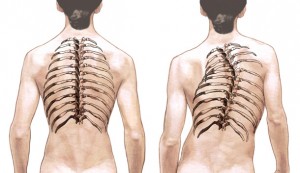
Normal spine (left) – Scoliosis (right)
What can cause adult degenerative scoliosis?
With age, the bones and connective tissue in the body suffer from wear and tear and start to break down. When that occurs in the spine, it can lead to changes that cause the spine to take on an abnormal, lateral curve. Common degenerative conditions associated with adult degenerative scoliosis include:
- Spinal stenosis (narrowing of the spinal canal)
- Degenerative disc disease
- Osteoporosis
- Compression fractures of the vertebrae
Symptoms of adult degenerative scoliosis
The most obvious sign of scoliosis is an abnormal curve of the spine that can cause some postural changes.
- Poor sense of balance
- Listing to one side
- One shoulder higher than the other
- Humpback
- Irregular gait or limp because one leg is longer than the other
- Difficulty sitting or standing
Other symptoms of adult degenerative scoliosis include:
- Pain, particularly pain in the back or affected area
- Spinal rigidity
- Stiffness in the back
- Unusual sensations in the body, particularly the legs, such as tingling or “pins and needles” or loss of sensation
- Muscle weakness
- Problems breathing
- Heart problems
Diagnosing adult degenerative scoliosis
University Spine Center can help you get an accurate diagnosis of your condition. This starts with a thorough physical examination and medical history. You may be asked to do some bending or moving during the examination. In some cases, you may be asked to get X-rays, typically front and side views. In some cases, a CT scan or MRI scan may be advisable.
Assessing adult degenerative scoliosis
Adult degenerative scoliosis is usually assessed by spine experts in terms of its shape and severity. There are many degrees of adult degenerative scoliosis.
Treatments for adult degenerative scoliosis
University Spine Center offers the latest, state-of-the-art treatment options for adult degenerative scoliosis. No one treatment is right for everybody, so discuss the choices with your University Spine Center team and your family. Treatment options may include
- Medication (for pain management)
- Physical therapy
- Massage therapy
- Braces
- Surgery
Surgery is not the first-line approach for adult degenerative scoliosis but may be appropriate if the curvature is extreme, pain becomes severe or it appears that the scoliosis is causing problems with your heart or lungs. University Spine Center offers world-class expertise in spinal procedures and will discuss the approaches appropriate in your case.