Have a Questions?
Don’t put up with pain! Request an appointment
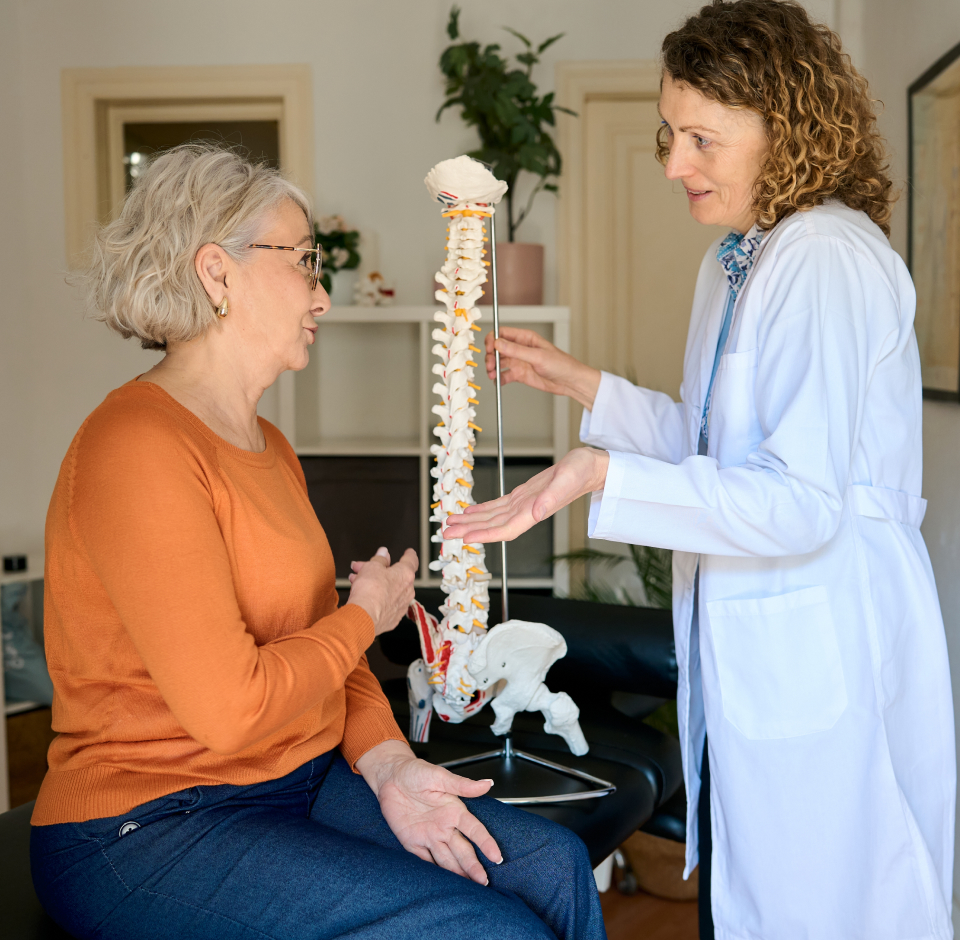
Ankylosing spondylitis (AS) is a form of arthritis that typically affects the back and can lead to chronic pain.
Ankylosing spondylitis has been described as arthritis of the spine. The body’s immune system fights against itself. It runs in families, and new research has identified a gene associated with this condition.
Ankylosing spondylitis causes swelling between the vertebrae of the spinal column. This can put pressure on nerves and cause pain. Over time, ankylosing spondylitis may limit movement. Often ankylosing spondylitis affects the sacroiliac joints at the base of the spine, where the spine attaches to the pelvis.
The first symptoms are often back pain and stiffness that start in adolescence or early adult years. Many people experience pain and stiffness that comes and goes in “flares.” For some, the condition can be disabling.
Although there is no cure for this condition, it can be managed using the state-of-the-art approach of:
Medications help reduce inflammation. This permits physical therapy and exercise, which can improve mobility and may help to reduce pain and stiffness.
In some instances, surgery may be recommended.
Your physician will discuss medications with you, but in general, three main types of drugs are used for ankylosing spondylitis patients:
With good medical management, many people with ankylosing spondylitis live relatively normal lives. For some, symptoms are mild; for others, symptoms are intense but come and go; and for others, the disease may be debilitating. Over time, the condition tends to worsen.
Once you have a diagnosis, discuss your treatment options with your physician. While there is no cure for ankylosing spondylitis, there are many effective strategies to manage it.
While you are under treatment, you must be mindful of events that may require medical intervention. If any of the following occurs, be sure to consult with your doctor: