Have a Questions?
Don’t put up with pain! Request an appointment
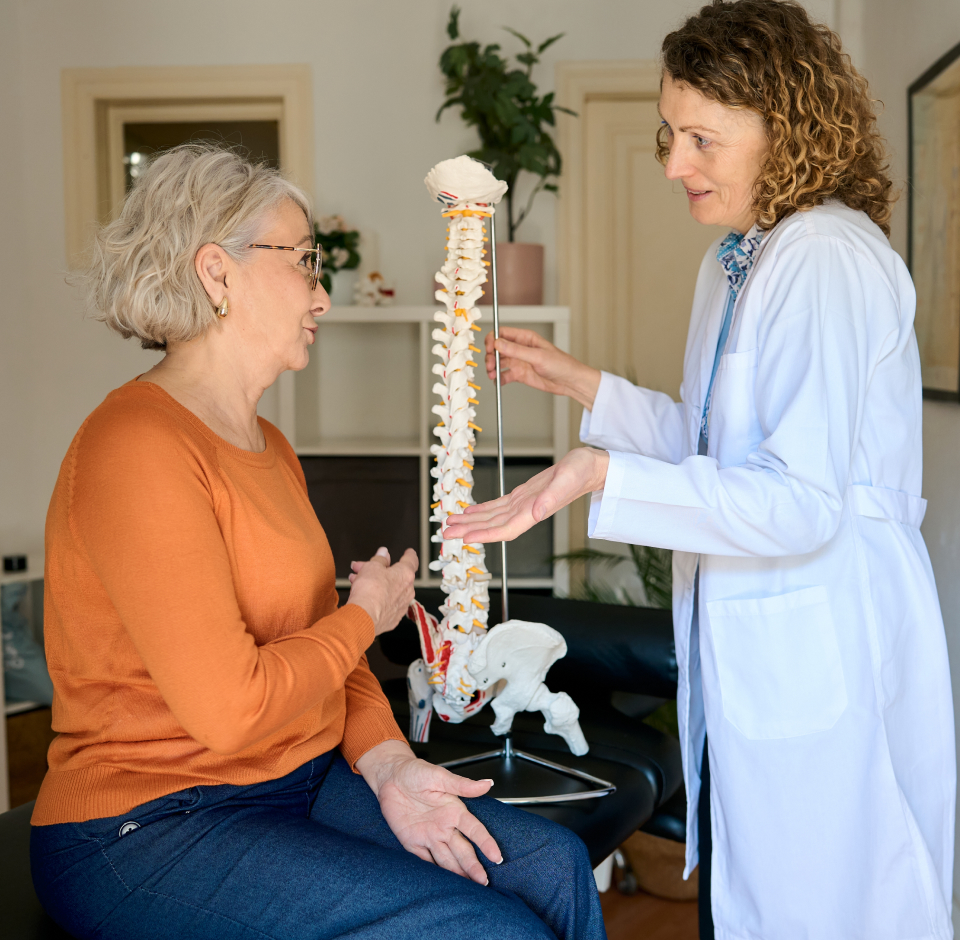
The spine consists of the backbone, a column of bones called vertebrae that are stacked one on top of the other. This vertebral column protects the spinal cord. The spinal cord is where the body’s nerves are rooted. The spinal cord acts like an information superhighway for messages from the body to travel, via the nerves, to and from the brain. When the spinal or vertebral column gets narrow, it can put pressure on the spinal cord and the nearby nerves. This condition is called spinal stenosis. (Stenosis means “narrowing.”)
There are many things that can cause spinal stenosis. Several of them are related to the aging process and are, thus, more common in older people.
However, spinal stenosis can also be caused by:
Some people may show evidence of spinal stenosis on an X-ray but have no symptoms. On the other hand, sometimes symptoms of spinal stenosis are severe. Typical symptoms include:
If you have cervical spinal stenosis, you may also have neck pain or shoulder pain.
In the most severe cases, there may be loss of bladder or bowel control, weakness and even paralysis. If these symptoms occur, seek medical care at once.
University Spine Center has helped many people with spinal stenosis and can assist you in getting an accurate diagnosis. During your physical examination, you may be asked to sit, stand, walk, bend or lift your legs as the University Spine Center physician assesses your condition. You may also undergo:
The physicians at University Spine Center will discuss the most appropriate treatment options for you. This may include drug therapy, physical therapy, exercise and steroid injections. In some cases, surgery may be appropriate.