Emergency Services
 Request A Call
973-686-0700
Lorem ipsum dolor sit amet, consectetur adipiscing elit, sed do eiusmod tempor incididunt ut labore et dolore magna aliqua.

Alternatives to spinal fusion in NJ
Spinal surgery is a serious subject. One of the most common back procedures involves fusion, in which two or more vertebrae (the bones that stack one on top of the other to form the spinal column) are joined together, or fused. Fusion is considered an appropriate treatment for certain people with degenerative disc disease or spondylolisthesis.
Spinal fusion has been successfully performed on hundreds of thousands of people. The surgery literally fuses vertebrae together, which limits their normal mobility. Often bone grafts or hardware (rods, plates, screws) are required to join the vertebrae. This can take weeks or months to heal. So while spinal fusion has brought great relief to many people, it is an operation that should be considered carefully.
Why an alternative to fusion?
University Spine Center offers its patients the very latest in therapeutic options and medical devices. Today there are many alternatives to fusion. These include:
- Microdiscectomy (treatment for sciatica)
- Laminectomy (without fusion)
- Artificial discs
- Percutaneous endoscopic discectomy
The main advantages over conventional spinal fusion may include:
- Faster recovery times after surgery
- More spinal mobility after surgery
- Reduced stress on adjacent discs
- No need to harvest bones for a bone graft
Microdiscectomy
Microdiscectomy, sometimes called microdecompression, is a minimally invasive procedure in which part of the intervertebral disc is removed. By strategically removing a section of the disc, pressure on the nerve may be drastically reduced or eliminated. There are three main ways that microdiscectomy can be performed:
- Mini-open, which is like a conventional (or “open”) discectomy but using somewhat smaller incisions.
- Tubular allows the surgeon to access the disc through a special expanding tube.
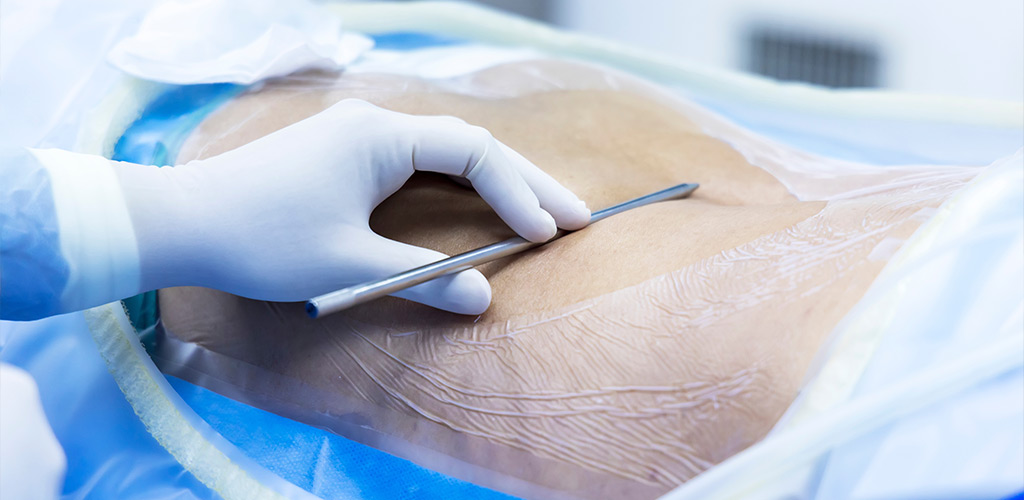
- Endoscopic surgery uses a tiny video camera and a tube so that the surgeon can visualize the area through a very small incision and perform the surgery using specialized instruments.
Micodiscectomy without fusion is often performed in the lumbar (lower back) or neck (cervical) region.
Laminectomy without fusion
The spine is supported by a stack of bones called vertebrae. Each vertebra has two arch-shaped areas called laminae. In some instances, removing the laminae can help decompress the spinal canal or reduce pressure on nearby nerves. While laminectomy removes the lamina, there are different approaches and different ways to perform the procedure. If your University Spine Center physician recommends laminectomy without fusion, he or she can explain to you how the procedure will be done. In most cases, only a small amount of bone is removed. It is not always necessary to have spinal fusion with laminectomy.
The artificial disc
The artificial disc is not appropriate for everyone, but it may be considered for people with chronic pain from degenerative disc disease or spondylolisthesis between the fourth and fifth lumbar vertebrae (L4 and L5) or the fifth lumbar vertebra and the sacrum. It is often considered appropriate only when other efforts at treating back pain and limitations have not been successful.
Percutaneous endoscopic discectomy
Percutaneous endoscopic discectomy is a minimally invasive surgical procedure that can help relieve pressure within the disc and, in that way, reduce or even eliminate pain. In this procedure, a small incision is made through the skin (percutaneous) and a camera and other tools are inserted through a tube into the spine (endoscopy). The surgery relieves pressure on the damaged disc.
Understanding the risks and benefits of surgery
University Spine Center is committed to providing you with complete and balanced information about your surgical options. There are many potential benefits for fusion or procedures like microdiscectomy or laminectomy without fusion. Your physician is your best resource for determining the best treatment for you.
All surgeries carry with them certain risks, and back surgery has very specific risks. It is possible for back surgery to not have the desired effect; that is, you may or may not derive pain relief from the procedure. It is important that you understand these risks as well as benefits before you reach a decision on back surgery of any kind.



Frequently Asked Questions
See All Questions
We specialize in spine, pain management, vascular, and hand disorders, offering both surgical and non-surgical treatments.
In most cases, a referral is not required. However, some insurance plans may require one. Please check with your insurance provider or call our office to confirm.
Please bring:
- A valid photo ID
- Insurance card
- Any imaging studies (MRI, X-rays, CT scans)
- Previous medical records
- A list of current medications
We are in-network with Horizon Blue Cross Blue Shield and Medicare.
If you have out-of-network benefits, we accept all commercial insurance plans and will work with you to maximize your coverage.
If surgery is recommended, our team will review all options, risks, benefits, and recovery expectations with you to help you make an informed decision.
Have a Questions?
Don’t put up with pain! Request an appointment

Our Locations
504 Valley Road, Suite 203
07470
Phone#
973-686-0700Fax#
973-686-0701
915 Clifton Avenue
07013
Phone#
973-686-0700Fax#
973-686-0701
142 NJ-17 N Paramus
07652