Emergency Services
 Request A Call
973-686-0700
Lorem ipsum dolor sit amet, consectetur adipiscing elit, sed do eiusmod tempor incididunt ut labore et dolore magna aliqua.

Scoliosis surgery for children in NJ
Scoliosis refers to an abnormal side-to-side curvature of the spine, which can throw off balance, impair walking and cause pain. Scoliosis can affect people of any age, but it is most common among adolescents. Congenital scoliosis refers to scoliosis a person has from birth. Juvenile scoliosis is scoliosis that occurs in children. Adolescent idiopathic scoliosis (AIS) occurs in adolescents for “no known reason.”
Abnormal spinal curvature in girls and boys
Pediatric scoliosis is described as an abnormal side-to-side curvature of the spine. Age is a distinguishing characteristic of pediatric scoliosis that may affect an infant, child or adolescent. Infantile scoliosis can be congenital (at birth) or develop to 3 years of age. Juvenile idiopathic scoliosis may develop between ages 4 and 10. Idiopathic means the cause is unknown. Adolescent idiopathic scoliosis can develop between ages 10 and 20.
Facts about pediatric scoliosis
- Among the types of pediatric scoliosis, infantile is least common and adolescent idiopathic scoliosis (AIS) is more common.
- Pediatric scoliosis may progress during a growth spurt.
- Scoliosis tends to run in families.
- More girls than boys develop AIS.
- It is estimated that 2% to 3% of all children between the ages of 10 and 16 have a degree of detectable AIS.
Congenital scoliosis may result from the spine’s failure to form normally. Other causes of scoliosis include trauma, tumors and neuromuscular problems.
Signs of pediatric scoliosis
- One shoulder or hip appears higher than the other.
- Skirt or trouser length may be uneven.
- Clothing does not fit properly.
- In a swimsuit, a sideward spinal curvature is visible.
- Back pain (rare).
Children require specialist care
University Spine Center provides a high level of quality care to young patients with scoliosis. Our orthopedic spine surgeons can partner with your child’s pediatrician to manage the evaluation and treatment of pediatric scoliosis. University Spine Center utilizes advanced diagnostic methods and tools that manage pediatric scoliosis by curve observation, spinal bracing and/or surgery.
Early, accurate diagnosis
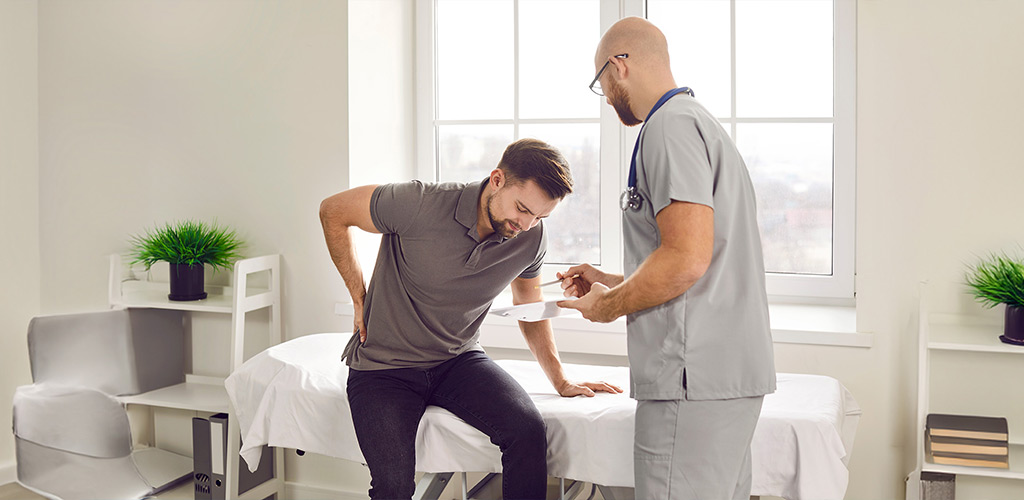
Early diagnosis can help manage and may prevent curve progression and/or deformity. During the consultation, we thoroughly review your child’s medical history and ask if any family member has or had scoliosis. This is important to know because scoliosis runs in families. Next, the orthopedic spine specialist performs an in-depth physical and neurological examination. Full-length standing X-ray studies are performed. The X-rays capture the entire length of the spine from the front, back and side of the body. CT scans or MRI may be necessary, too.
Genetic testing for progression of adolescent idiopathic scoliosis
ScoliScore is a painless test that only involves a saliva sample from your child. The results of ScoliScore combined with other clinical information we gather (e.g., curve size) can help determine the likelihood of curve progression and help us develop a more personalized treatment plan.
Scoliosis surgery
Not every person with scoliosis will require surgery. In fact, less than 1% of individuals with a diagnosis of scoliosis will require surgery. Many children can be effectively treated with braces. If your child has scoliosis, the University Spine Center team will examine him or her and determine the best course of treatment based on the degree of scoliosis and other factors, such as age and general health. Some people with scoliosis require surgical intervention. Scoliosis surgery is performed under general anesthesia in order to keep the curve from getting worse, stabilize the spine and correct the deformity.
How we perform scoliosis surgery
Before surgery, your University Spine Center surgeon will determine the best surgical approach. This may be from the front, back or side.
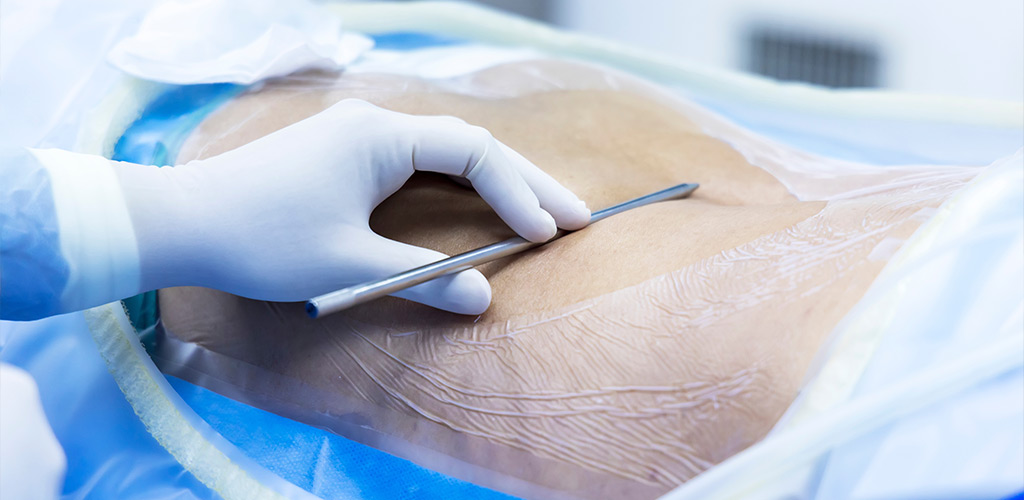
During surgery, a video X-ray called a fluoroscope helps the surgeon visualize the spine at all times. Depending on the patient, one or more discs may be removed (discectomy) or some of the vertebrae may be cut into more wedge-shaped forms (osteotomy). In some cases, scoliosis surgery may be performed minimally invasively, that is, through a very small incision, and take very little time. In other cases, scoliosis surgery is an open procedure that can take longer.
Scoliosis surgery involves fusion, which means that spinal instrumentation (such as screws, pins, rods, plates) is implanted to secure vertebrae to each other. Bone graft material is packed in the empty space between the upper and lower vertebral bodies and around the instrumentation. The bone graft stimulates the fusion or joining of the vertebrae.
Bone grafts
Scoliosis surgery requires a bone graft. There are several different types of bone grafts. We will discuss the most appropriate type for your procedure. Options include:
- Autograft, which is bone taken from the patient’s neck area during laminectomy or it may be taken in a separate procedure from another part of the body, such as the hip.
- Allograft, which is bone from a donor.
- Synthetic bone graft material (manmade).
Following surgery
After surgery, we take X-rays in order to ensure that the curve is corrected and that any instrumentation (rods, screws) and graft are in the right place. The incision is then closed and bandaged. The patient recovers in a special recovery area, where our recovery team monitors the patient’s vital signs and recovery. Postsurgical pain is typical following scoliosis surgery and is usually managed effectively with pain medication.

Frequently Asked Questions
See All Questions
We specialize in spine, pain management, vascular, and hand disorders, offering both surgical and non-surgical treatments.
In most cases, a referral is not required. However, some insurance plans may require one. Please check with your insurance provider or call our office to confirm.
Please bring:
- A valid photo ID
- Insurance card
- Any imaging studies (MRI, X-rays, CT scans)
- Previous medical records
- A list of current medications
We are in-network with Horizon Blue Cross Blue Shield and Medicare.
If you have out-of-network benefits, we accept all commercial insurance plans and will work with you to maximize your coverage.
If surgery is recommended, our team will review all options, risks, benefits, and recovery expectations with you to help you make an informed decision.
Have a Questions?
Don’t put up with pain! Request an appointment
Our Locations
504 Valley Road, Suite 203
07470
Phone#
973-686-0700Fax#
973-686-0701
915 Clifton Avenue
07013
Phone#
973-686-0700Fax#
973-686-0701
142 NJ-17 N Paramus
07652